AI Agents, Explained for Executives: From Chatbots to Digital Coworkers
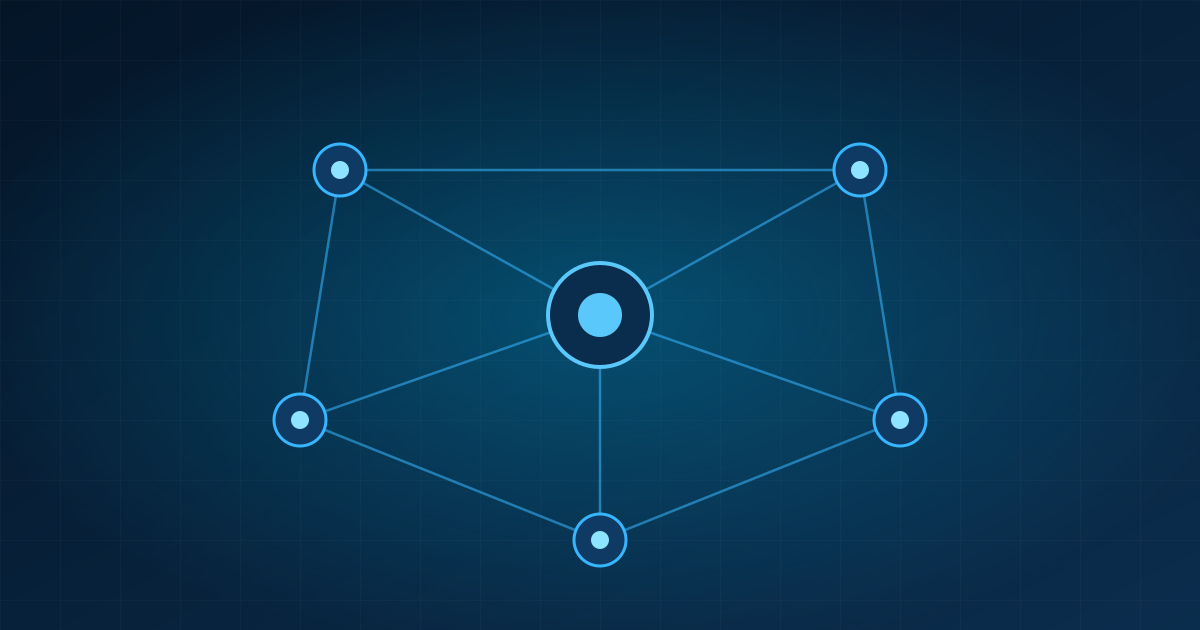
A chatbot answers questions. An agent gets things done. That single distinction explains most of the confusion — and most of the missed opportunity — in how businesses evaluate AI today.
An AI agent perceives its environment (your inbox, your order queue, your monitoring dashboards), reasons about what needs to happen, and then acts: it calls APIs, updates records, sends messages, schedules follow-ups. Give it a goal and guardrails, and it runs the loop without a human driving every step.
IBM's clear breakdown of what makes an AI agent different from a simple chat interface.
What a working agent looks like
Picture accounts receivable. A traditional workflow: someone exports overdue invoices, writes reminder emails, logs replies, escalates disputes. An agent version: the agent watches the ledger, drafts personalized reminders in your tone, sends them on schedule, parses replies, updates the CRM, and escalates only genuine disputes to a human. Same policy, zero drudgery, full audit trail.
Or take IT support. An agent triages tickets, resolves the known issues (password resets, access requests, VPN problems) end-to-end, and routes novel ones to engineers with a summary of everything it tried. Resolution times drop; engineers stop context-switching into trivia.
The pattern is always the same: high-volume decisions with clear rules and escape hatches to humans. Agents don't replace judgment — they clear the queue so judgment gets applied where it matters.
Questions to ask before you commit
Where does the data live, and can it leave? If you handle regulated or sensitive data, you may need local or private-cloud LLMs rather than public APIs — that's a solved problem, but it must be decided up front.
What happens when the agent is wrong? Every serious deployment needs confidence thresholds, human-in-the-loop checkpoints and logging you can actually review. Ask any vendor to show you the failure path, not the demo path.
Who owns it after launch? Agents are software: they need monitoring, evaluation and iteration. A partner who disappears after go-live is selling you a demo, not a system.
Ready to put this to work?
Tell NOVA what you'd like to automate — get a scoped answer and a free discovery call in one chat.